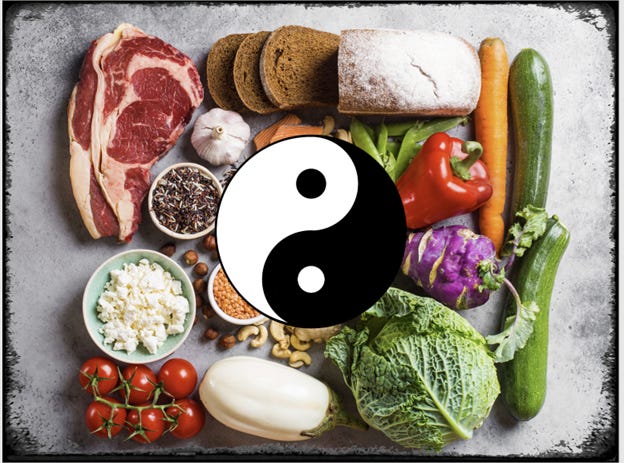
Imagine sitting down to a beautifully prepared meal—a colorful salad with dark leafy greens and juicy berries, a warm bowl of roasted sweet potatoes, a perfectly cooked piece of salmon, and a sprinkle of crushed walnuts on top. Without realizing it, you’ve created a meal that embodies balance—not just in flavor but in how different bioactive compounds work together in your body.
Traditional Chinese Medicine (TCM) has emphasized balance for centuries. In TCM, foods are categorized as yin or yang, representing opposite yet complementary forces that keep the body in harmony. Yin foods are cooling, hydrating, and calming, while yang foods are warming, energizing, and stimulating. Too much of one and not enough of the other? Your body may feel out of sync.
But this isn’t just an ancient philosophy—it’s also the foundation of functional nutrition. Instead of looking at individual nutrients in isolation, functional nutrition views food as a dynamic system in which different compounds interact and influence overall health.
Let’s delve into the world of five powerful bioactive compound pairs that function like yin and yang—balancing each other to keep you feeling your best. These are not just theoretical concepts but practical tools that you can use to create balanced, healthful meals every day.
A Tale of Two Antioxidants: Polyphenols (Yin) & Carotenoids (Yang)
Meet Anna, a busy professional who struggles with energy crashes throughout the day. She loads up on coffee, but by mid-afternoon, she’s exhausted. A friend suggests she start her morning with a polyphenol-rich smoothie—blueberries, spinach, and a little dark chocolate. Polyphenols are cooling, anti-inflammatory antioxidants that help fight oxidative stress and stabilize energy levels.
Later, she adds carotenoid-rich foods like roasted carrots and red bell peppers to her lunch. Carotenoids are warming, immune-boosting, and great for vision and skin health. By combining both, Anna’s body benefits from the balance—calming inflammation while still fueling her vitality.
The Fatty Acid Equation: Omega-3 (Yin) & Omega-6 (Yang)
Mark is training for a marathon and wants to improve his recovery. He’s been eating many nuts and seeds (high in omega-6 fatty acids), but his joints still feel inflamed. His nutritionist points out that while omega-6s (yang) are essential for immune function and energy, too much can be inflammatory. The fix? More omega-3s (yin) are found in fatty fish, flaxseeds, and walnuts. These cool down inflammation and support brain and heart health.
By adjusting his diet to balance omega-3s and omega-6s, Mark notices less joint pain and improved endurance. Balance wins again.
Iron Absorption: Heme Iron (Yang) & Vitamin C (Yin)
Emma, a busy mom, often feels fatigued and struggles with low iron levels. She eats plenty of iron-rich foods like lean meats and spinach but still experiences deficiency symptoms. After consulting a nutritionist, she learned that while heme iron from animal sources (yang) is easily absorbed, non-heme iron from plant-based sources needs a little help.
Enter vitamin C (yin)—a powerful nutrient that enhances iron absorption. She pairs her iron-rich meals with citrus fruits, bell peppers, and strawberries. For breakfast, she enjoys scrambled eggs with sautéed spinach and a side of fresh orange slices. At dinner, she squeezes lemon juice over her lentil soup. Her energy levels improved within weeks, and she no longer feels constantly drained.
By combining iron’s warming, strength-building properties with vitamin C’s cooling, absorption-boosting power, Emma finds the balance her body needs to thrive.
Spice vs. Cool: Flavonoids (Yin) & Capsaicinoids (Yang)
Maria loves spicy food, but sometimes it doesn’t love her back. She adores adding chili peppers (rich in capsaicinoids and yang) to her meals because they boost her metabolism and circulation. However, they also leave her with occasional digestive discomfort.
She starts pairing her spicy meals with flavonoid-rich foods like citrus fruits and green tea to counteract this. Flavonoids (yin) are anti-inflammatory and protective for the heart and gut, helping soothe her digestion while allowing her to enjoy her favorite spicy dishes.
The Detox Duo: Sulforaphane (Yin) & Curcumin (Yang)
Jason has been feeling sluggish and bloated. He’s read about detoxification but doesn’t want to do extreme cleanses. Instead, he turns to sulforaphane, a natural compound in broccoli and Brussels sprouts that activates detox enzymes in the body.
To enhance the effect, he adds curcumin, a powerful anti-inflammatory compound found in turmeric, some mustards, and curry powder. Curcumin warms the body and reduces oxidative stress. This yin-yang combo works beautifully, supporting Jason’s natural detox processes while also soothing inflammation, leaving him feeling lighter and more energized.
The Gut Health Game-Changer: Prebiotics (Yin) & Probiotics (Yang)
Sophie has struggled with digestive issues for years. She’s tried probiotics, but her symptoms only improved slightly. Her nutritionist explains that probiotics (yang)—found in fermented foods like yogurt and kimchi—introduce beneficial bacteria into the gut, but they need prebiotics (yin) to thrive.
She adds garlic, onions, and bananas—prebiotic-rich foods that feed good gut bacteria. Within weeks, she notices better digestion, fewer bloating episodes, and improved energy. By nourishing her microbiome with both yin and yang elements, her gut finally finds balance.
The Big Takeaway: Balance is Everything
Health isn’t about avoiding certain foods or following rigid rules. It’s about balance. Like yin and yang, different bioactive compounds complement each other to support metabolism, immunity, digestion, and overall well-being.
By being mindful of these nutritional yin-yang pairings, you can create a diet that keeps you energized, resilient, and thriving.
So, what’s on your plate today? Are you getting a bit of yin and a little yang?